
Platform & how we work
Built from the site up — which is why the oversight actually holds.
Most CROs learn site reality secondhand. Aspira grew from running sites, then added the sponsor-facing layer: project management, regulatory strategy, monitoring oversight and data delivery.
The SMO discipline
A trial is only as good as the site running it.
A Site Management Organization owns the part of clinical research that protocols assume and rarely specify: the people, the paperwork and the patient experience that turn a study design into usable data. Aspira builds and operates that infrastructure directly.
Sponsors and CROs design studies, define endpoints and carry regulatory accountability. Sites generate the evidence. Between those two realities sits an enormous amount of unglamorous operational work — investigator recruitment, IRB correspondence, coordinator training, consent execution, source documentation, specimen handling, participant follow-up, deviation management.
When that work is left to individual practices, quality becomes a function of whoever happens to be staffing the clinic. An SMO removes that variance. It standardizes site conduct, professionalizes the coordinator function and gives sponsors one operational counterpart accountable for execution across every location.
Aspira does not broker access to sites. We run them.
Investigator network
Recruiting, credentialing and retaining qualified investigators — then keeping them productive across consecutive protocols rather than one-off studies.
Regulatory & IRB
Submission packages, amendments, continuing reviews, delegation logs and essential documents maintained to inspection standard throughout the study, not reconstructed at close-out.
Recruitment & retention
Pre-screening against real chart-level data, community-rooted outreach, bilingual consent and a visit experience engineered so participants complete the protocol.
Sponsor & CRO interface
A single accountable operational counterpart for monitoring visits, query resolution, payments, supply logistics and escalation — instead of a dozen unaligned sites.
GCP & quality systems
One SOP library, one training curriculum, one deviation and CAPA process applied identically at every location we operate.
The net effect
Five functions, one owner. Sponsors get predictable enrollment, inspection-ready documentation and a site network that improves study over study instead of starting over each time.
Why our model is different
Standardization is the product. Speed and data quality are the outputs.
Most site networks are affiliations — shared branding over independent operations. Aspira is a single operating company with one quality system, which changes what a sponsor can reasonably expect from us.
Centralized quality across multiple physical sites
Our coordinators are not trained by their site — they are trained by Aspira. The same SOPs, source templates, monitoring readiness checks and escalation rules govern every Aspira site, which is why data from one location looks like data from the other.
Relationships and regulatory pathways already exist
Sponsors do not pay for us to find investigators, negotiate first-time master agreements or learn an IRB's preferences. Contract templates, budget frameworks and submission routes are pre-established, so activation begins at execution rather than introduction.
We absorb the complexity of emerging markets
Operating research sites in Puerto Rico — and next in Latin America and the Philippines — carries logistical, linguistic and regulatory friction. Aspira holds that operational burden internally and presents the sponsor a familiar, US-framework interface.
Why we're credible
Operating history, not a pitch deck.
Every claim above is backed by sites that have been running for years, in two jurisdictions, with the hospital relationships to prove it.
6 years
Continuous site management operations
2+ years
Operating in Puerto Rico under the US regulatory framework
Metro Pavia
Strategic partnership providing established hospital infrastructure and island-wide patient access
Phase 1
One of few organizations in Puerto Rico equipped to conduct Phase 1 studies
The foundation we're scaling from
The systems that make us a trusted SMO today are the systems a CRO is built on.
Full-service CRO capability is not a different business — it is the same quality infrastructure, extended outward. Standardized SOPs become sponsor-facing quality management. Coordinator training becomes monitoring oversight. Regulatory fluency in two jurisdictions becomes multi-country submission strategy. We are adding each layer only when we can deliver it to the standard our sites are already held to.
That is how Aspira intends to manage Phase 1 through Phase 4 studies internationally — across Puerto Rico today, Latin America and the Philippines next — with AiRA as the technology layer compressing the operational cycle time underneath it all. The evolution below is sequenced deliberately, and nothing is marketed before it is operating.
The evolution
From site management organization to full-service CRO.
The transition is deliberate and sequenced. Each capability is added only when it can be delivered to the same standard as our site operations.
SMO foundation
Site network, coordinators, investigators, recruitment, retention
Integrated services
Regulatory submissions, project management, quality systems, training
CRO layer
Monitoring oversight, data management, biostatistics coordination, medical writing
Global delivery
Multi-country study management across the Americas and Asia Pacific
Phase capability
Phase 1 through Phase 4, with real depth at the hardest end.
First-in-human & early signal
Dedicated Phase 1 capability in Ponce with controlled dosing environments, intensive PK sampling and rapid safety escalation pathways.
Operational depth index
Dose finding & proof of concept
Tight protocol adherence in specialized indications, with investigator oversight designed for adaptive amendments.
Operational depth index
Confirmatory, multi-site
Coordinated enrollment across the Puerto Rico network and expansion-market sites with centralized regulatory and data management.
Operational depth index
Post-market & registry
Long-horizon follow-up leveraging health-system relationships and durable patient engagement.
Operational depth index
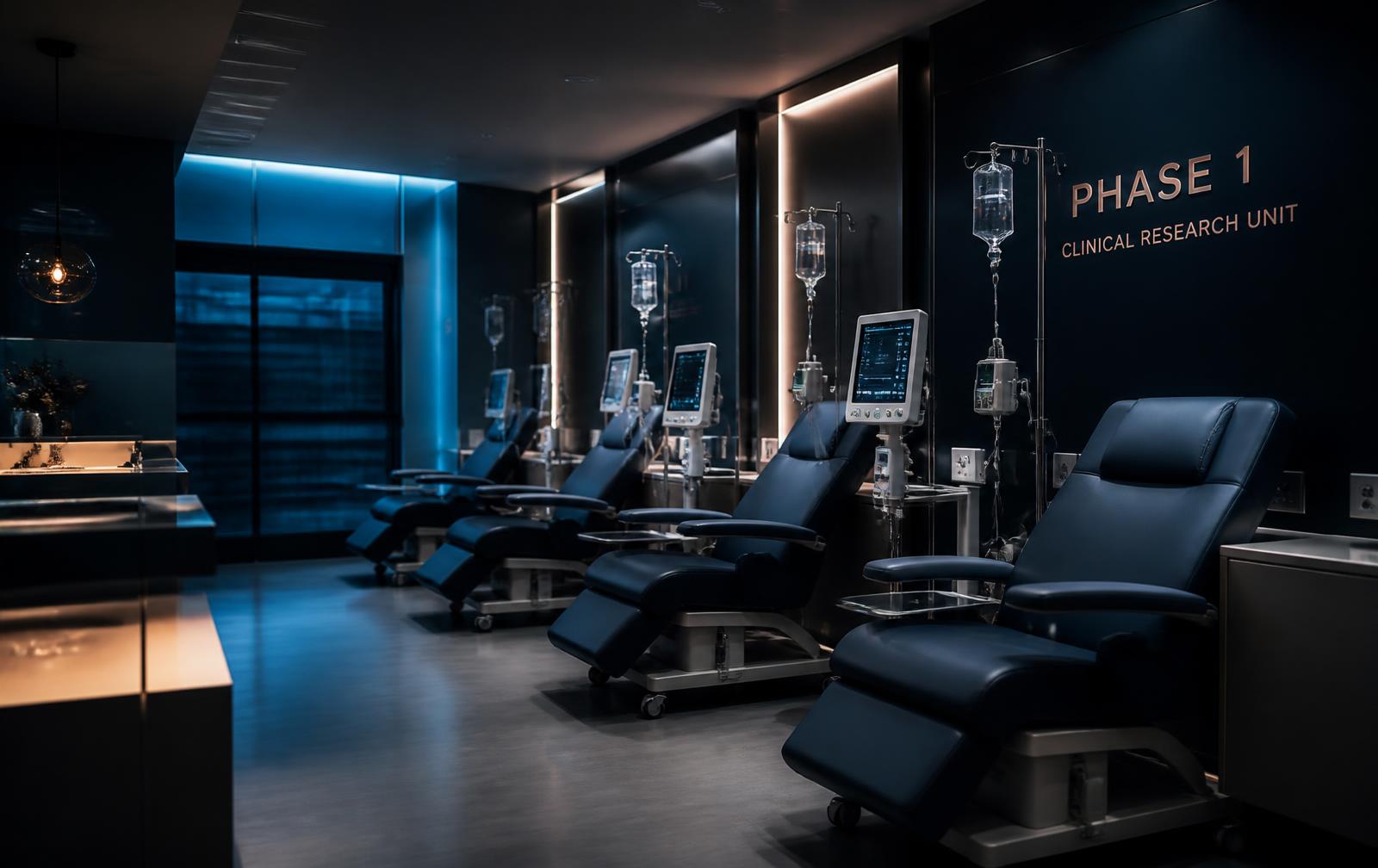
Ponce, Puerto Rico
Controlled Phase 1 environment: continuous monitoring, intensive PK sampling and pre-defined escalation pathways.
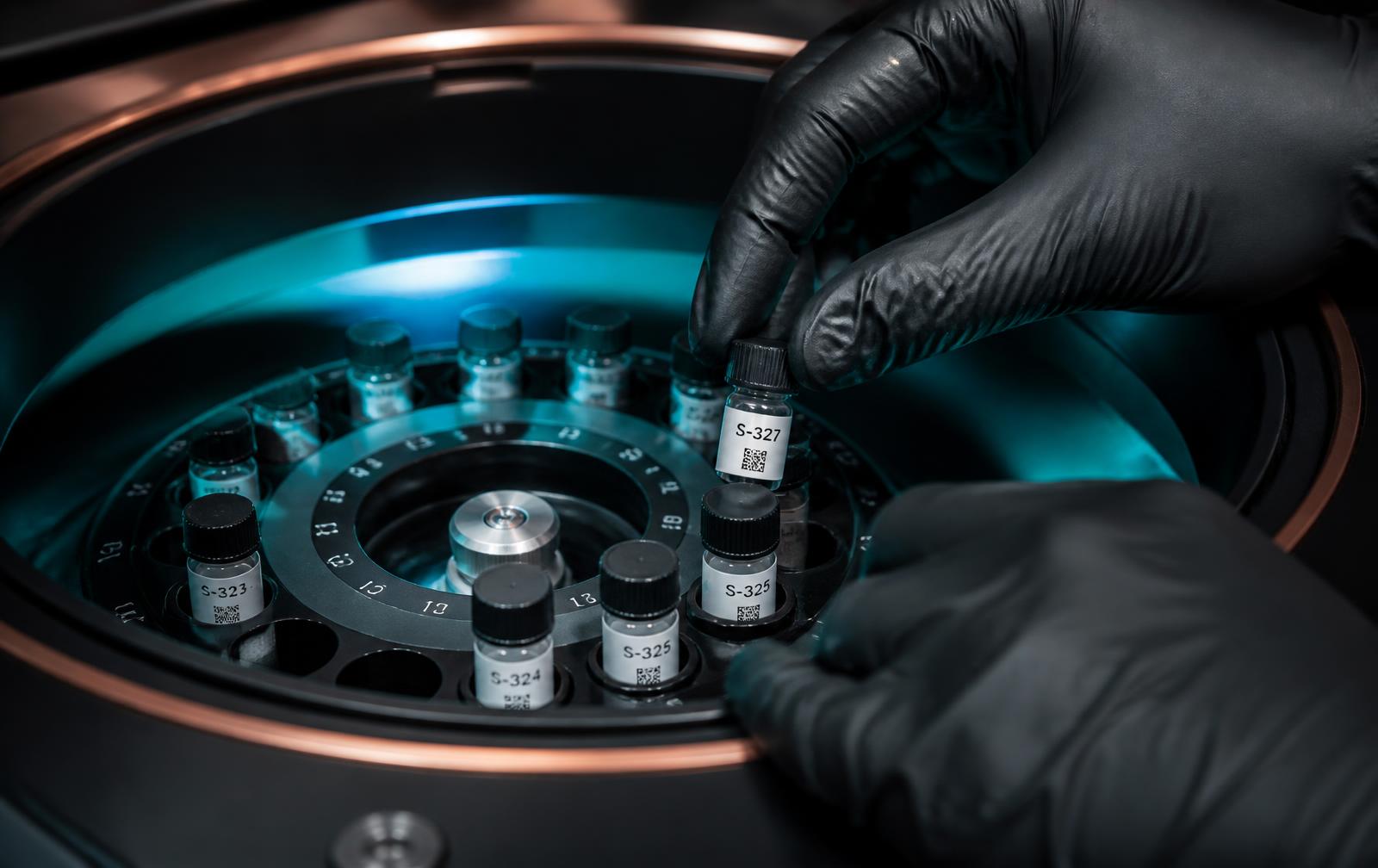
Sample chain of custody
Barcoded specimen handling, processing windows and shipment logs reconciled against the protocol schedule.
Animated workflow
The clinic partnership model, stage by stage.
Doctor-based practices carry the patient relationship. Aspira carries the research load — onboarding, training, coordinators, documentation and reporting — so the clinic contributes access without absorbing operational risk.
Operating model — doctor-based clinics
How Aspira works with doctor-based clinics
Stage 01 / 06
Week 0–2
We meet the practice where it is: contracts, delegation of authority, coverage-analysis review and a workload model the physician actually agrees to.
Hover or select a stage to hold it

Physician partnership
The investigator stays a physician. We handle the research.
Every partnered clinic gets a named coordinator, documented delegation of authority and a workload model agreed before the first participant is screened.
Study lifecycle
One clock. One team. Five stages.
- 01
Feasibility
Site, investigator and population assessment answered in days with real chart-level insight.
- 02
Start-up
Contracts, IRB submissions, regulatory packets and site activation on a standardized clock.
- 03
Enrollment
Community-rooted recruitment, pre-screening and referral pathways through partner health systems.
- 04
Conduct & monitoring
Coordinator-led visit execution, source documentation and query turnaround as an operating rhythm.
- 05
Data & close-out
Clean-file discipline, reconciliation and reporting built for regulatory scrutiny.
Next step
Ask us for a feasibility response.
Send the synopsis. We'll return site availability, population estimates and a start-up timeline you can hold us to.